UNLV Basketball Is at a Crossroads and The Rest Of This Season Will Decide Which Way It Turns
For more than a decade, UNLV men’s basketball has lived in the same uneasy space. Not irrelevant, but not threatening. Not rebuilding, but never fully built. Seasons begin with optimism, new faces, and new messaging, only to arrive at February carrying familiar questions in slightly different form.
UNLV fans know this feeling too well. Not because they lack patience, but because they have shown it again and again. They have bought into resets, endured transitions, and waited through “next years” that never quite arrive. That fatigue is not entitlement. It is earned.
The 2025-26 season has reached that point again. UNLV is effectively out of the NCAA Tournament at-large picture. That conclusion is not emotional or reactionary; it is mathematical. The resume gaps are real, the NET position is too low, and the margin for error disappeared weeks ago.
But what matters now is not what UNLV cannot do this season. It is what this season is being asked to do.
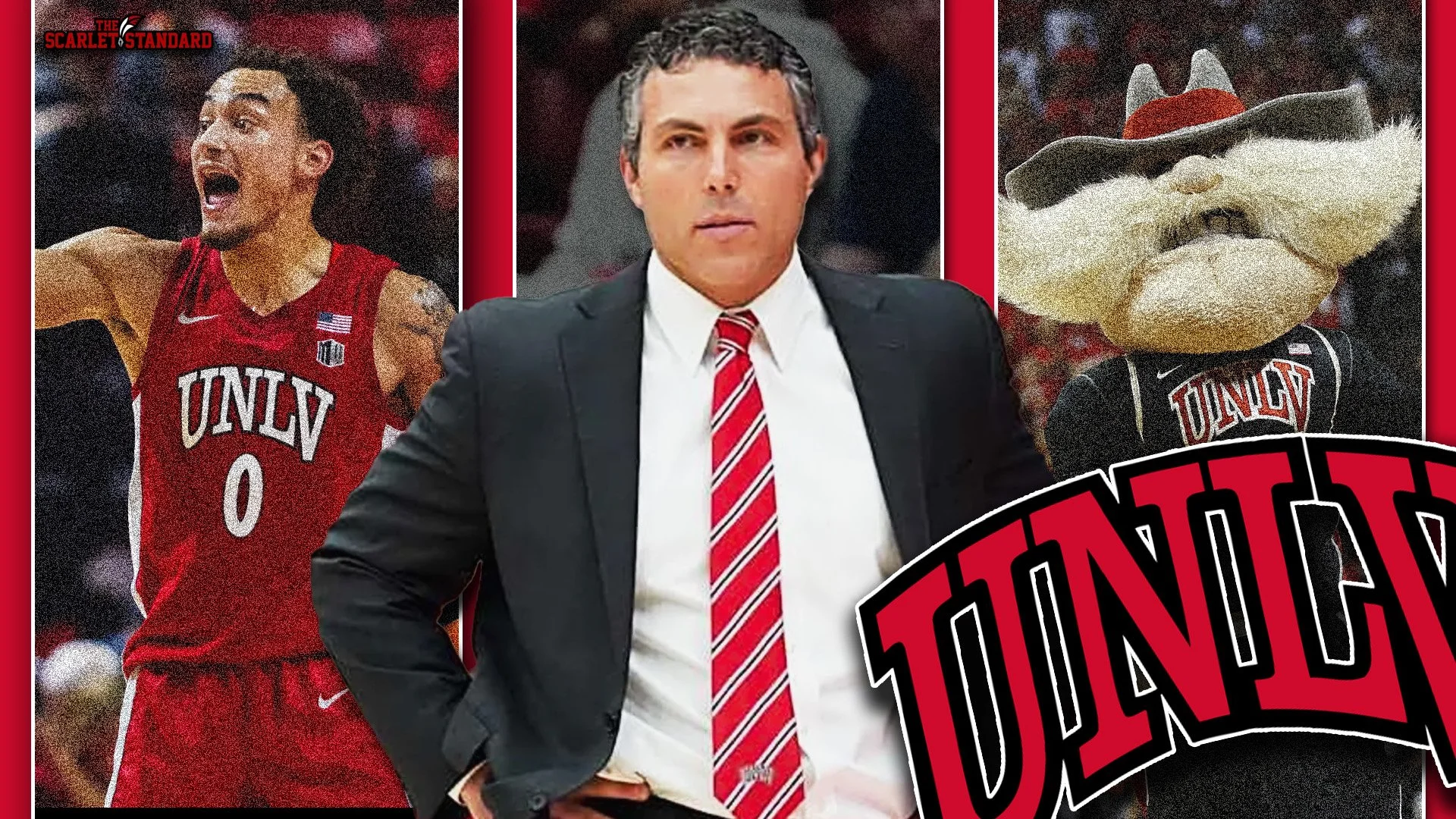
2025-26 is the evaluation year for Josh Pastner. 2026-27 is the test.
What follows is not a roadmap back to March. It is a set of non-negotiables. If UNLV meets them, the program exits this season with credibility intact. If it does not, next season begins already compromised.
Where UNLV Actually Stands and Why It Frames the Evaluation
Any honest evaluation must begin with context. As of January 31, the numbers are blunt. UNLV sits at NET 146, with a 10-11 overall record and 5-5 mark in the Mountain West. On paper, this is the definition of the middle: not collapsing, but nowhere near the conversation that matters in March.
The quadrant breakdown explains the tension. There is a real ceiling here. UNLV is 1-2 in Quad 1, highlighted by a 10-point road win at Utah State (NET 25). In Quad 2, the Rebels are 3-4, with quality road wins at Memphis and Stanford. But the floor is just as real. A 1-3 Quad 3 record includes a home loss to Montana. In Quad 4, UNLV is only 4-2, with home losses to UT Martin and Tennessee State.
On a possession level, the picture is almost perfectly average. Through 21 games, UNLV and its opponents are dead even in points per game (77.9-77.9) and rebounding (35.5-35.5). The Rebels actually hold a small edge in turnover margin (+1.2) and are ahead in steals (8.3 to 7.1) and blocks (4.3 to 3.1). On paper, that profile should belong to a team sitting comfortably above .500. Instead, it belongs to a group that is 10-11 and oscillating between impressive wins and dispiriting losses.

The Avalanche Risk in an Evaluation Year
An avalanche is when losses stop being instructive and begin to erode confidence and structural trust. You can feel that slide starting. In the span of a week, UNLV has been blown out at home by New Mexico, outclassed by San Diego State, and outworked by Nevada in Reno.
The Rebels have lost three straight and given up 56 second-half points to their in-state rival. After that loss, Josh Pastner admitted, “My heart hurts right now. Really, my heart hurts.” He stressed that it has to be “life or death every possession.” The words sound like urgency. The film does not. When a team turns it over on its first four possessions of a half and watches a 12-2 run evaporate into a 17-3 response, that is the beginning of an avalanche.
SCARLET STANDARD PODCAST
Structure, Not Effort, Must Be the Lens
Historical context makes the current situation unavoidable. UNLV entered this season with a .680 winning percentage over 57 years, four Final Fours, and a national title. The last twelve seasons have looked nothing like that. UNLV has not won an NCAA Tournament game since 2008, not made the tournament since 2013, and has not advanced past the Mountain West quarterfinals since 2014, which is the longest drought in the modern UNLV era.
Josh Pastner’s 10-11 (.476) start sits near the bottom of the historical curve. For comparison, Lon Kruger started 17-14. Dave Rice started 26-9. Kevin Kruger started 18-14. Only Marvin Menzies (11-21) posted a clearly worse first season. When the record is mediocre, the identity has to be unmistakable. Pastner has preached “grit and toughness,” but slogans are not structure. When rim protection vanishes without one freshman, the issue is not who cares more; it is who knows what they are supposed to be.

The Roster Reckoning: What UNLV Will Lose and What It Must Keep
In the era of the Transfer Portal, a "lost season" carries a literal cost. The evaluation of 2025-26 is about the stability of the foundation. UNLV is guaranteed to lose four seniors: Kimani Hamilton (11.7 PPG), Howie Fleming Jr. (9.3 PPG), Al Green, and Walter Brown. Those losses remove a massive portion of the team's leadership and connective tissue.
To pass the "Test Year" in 2026-27, the program must fight to retain its core, but the reality is harsh: Dra Gibbs-Lawhorn (17.5 PPG) is exactly the kind of high-efficiency scorer who gets poached in the spring. If DGL hits the portal, the "Test Year" effectively dies on arrival. You cannot lose a 17-point engine and expect to "test" anything; you are back to a total reset.
If the worst-case scenario happens and DGL departs, the retention of the remaining core becomes a matter of program survival:
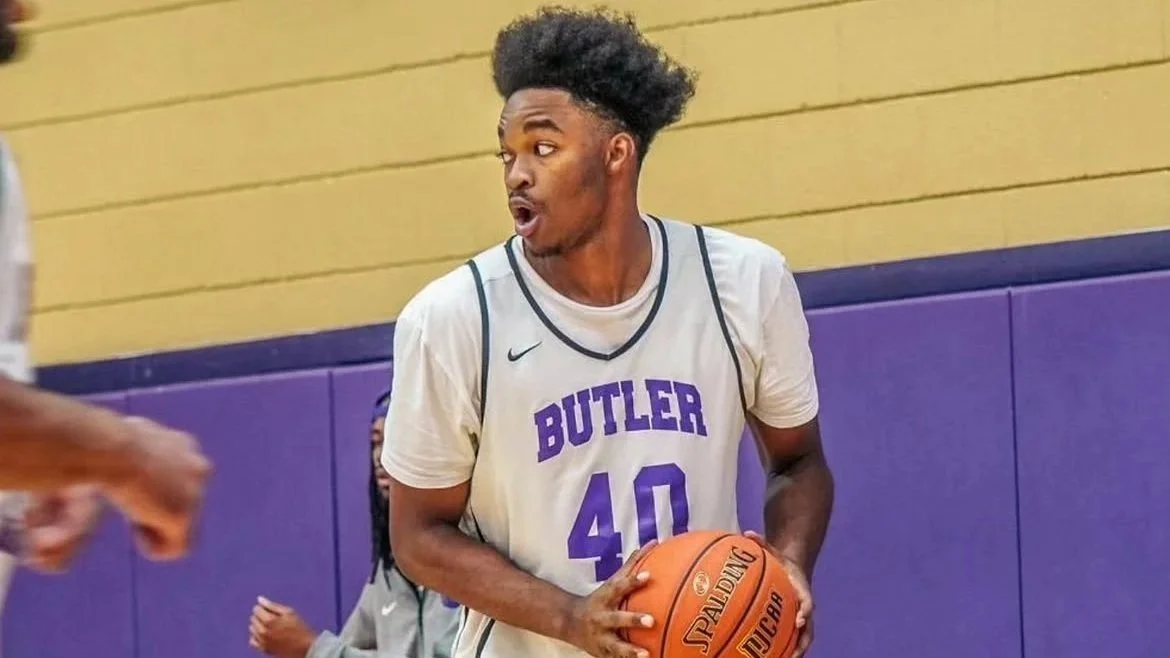
Tyrin Jones (10.6 PPG, 1.9 BPG): The local 6’9 rim protector. He must become the face of the program. UNLV cannot lose both its best guard and its best big.
Myles Che & Ladji Dembele: Both were expected to be major contributors before injuries sidelined them. Getting them back healthy is the only way the floor of the roster rises. Che, specifically, is the only true "organizer" on the roster—his return is the only way to end the "committee ball-handling" chaos.
Issac Williamson (9.9 PPG) & Naas Cunningham (6.3 PPG): These two must move from "promising pieces" to "starting requirements."
The Bigs (Stephen & Bannarbie): The physicality and size that the roster template requires.
The Portal Targets: Bridging the Gap
Keeping the core is only half the battle. To compete at the top of the league, the portal must deliver:
A Starting Wing Shooter: UNLV shoots 31.8% from three while giving up 34.5%. They need a 6’6+ wing who can guard and hit 38%+.
A Veteran Defensive Guard: Someone to stay in front of the league's elite scorers and take the defensive pressure off the backcourt.
A Stretch Four: With Hamilton leaving, they need a 6’8 forward who can score from all three levels and defend in space.
The "Alpha" (If DGL Leaves): If Gibbs-Lawhorn departs, UNLV must find a high-major caliber lead guard who can command 30+ minutes. Without one, the offense has no engine.
Identity Is the Bridge Between Evaluation and Test
By February, a program must be recognizable. Fans do not demand perfection; they demand recognition. They want to know what they are watching and what the team stands for.
The silence is already here. Pastner has called the home crowds an “eye-opening experience,” frustrated by paltry attendance. Fans are not staying away because they do not care. They are staying away because they no longer recognize what they are watching. Identity is the prerequisite for variance. Teams without identity cannot spring upsets; they only survive chaos.
Evaluation Now, Test Next
This is not a torch-bearing moment. It is an accountability moment. UNLV fans are not asking for miracles; they are asking for direction.
If UNLV exits 2025-26 with identity, competitive integrity, and its core, including a healthy Che and Dembele, intact, the program earns the right to run the test in 2026-27. But that test must be decisive. Next season cannot be framed as incremental. It must be tangibly elevated.
If fans can finish this season saying we know who we are and why, then belief in what comes next becomes rational. The remainder of 2025-26 will not decide UNLV’s postseason fate. It will decide whether next season starts with structure or another search for it.